


In 2007, when Cyclone Sidr struck the southern coast of Bangladesh, it washed away more than just homes. But for Runa Rani Biswas, a resident of coastal Bagerhat, Khulna, it also took away the stability of her family.
With a physically disabled husband and four young children, survival became a daily struggle.
Since they lost their home, Runa had to move back to her father’s land. She rebuilt a shelter from scratch. To keep her family afloat, she worked as a domestic worker and borrowed from relatives. She would often lie awake at night worrying about the future.
She recalls, “The income I had was not enough for my family”.
In March 2024, she came to know of an initiative called SWAPNO. The initiative is supported by the United Nations Development Programme (UNDP) and funded by the Local Government Division (LGD), the government of Sweden in Bangladesh, and Marico Bangladesh.
It empowered vulnerable women-headed households in 12 districts of Bangladesh with employment opportunities.
Alongside employment, Runa Rani participated in regular group sessions where she learned about savings mechanisms as well as essential life skills, including climate awareness, financial literacy, and small business management.
She saved money through SWAPNO and combined it with her personal savings. And initially, she was able to invest BDT 5,200 (USD 43) to launch a small vegetable business in a nearby market.
What makes Runa’s journey remarkable is her wise investment choices. She reinvested her earnings to purchase two goats, which have since grown to three. She leased two bighas of land for fish and paddy cultivation, generating approximately BDT 20,000–25,000 (USD 164-205) annually. Through disciplined savings, she also purchased a cow.
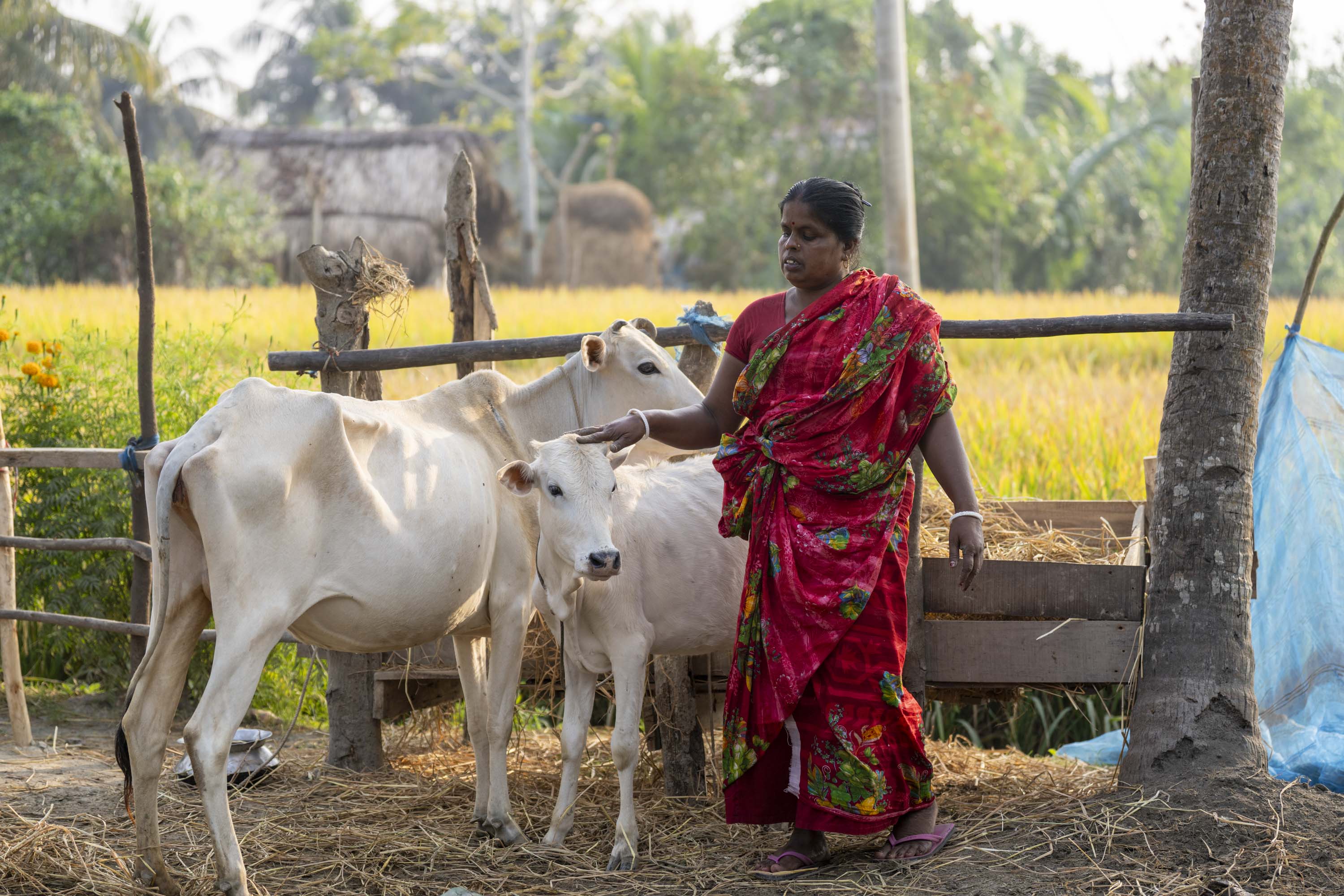
Today, Runa earns approximately BDT 400 (3.27 USD) each day, amounting to roughly BDT 14,000 (USD 115) a month in total. She no longer needs to work as a domestic worker. Her children are continuing their education, and the financial stress has significantly reduced.
“Now I am happy as I can manage my family with my own income,” she said.
Beyond improving her own livelihood, Runa’s journey reflects how initiatives like SWAPNO are helping advance the call of International Women's Day for rights, justice, and action for all women and girls.
By providing structured employment, financial knowledge, and savings opportunities, the programme enables women like Runa to claim their rights to economic participation and dignity. It promotes justice by supporting women who often face the greatest vulnerabilities—women-headed households affected by poverty and climate shocks. And it drives action by equipping women with the skills and confidence to build sustainable livelihoods for themselves and their families.
Through SWAPNO, women like Runa are not only rebuilding their lives after disaster; they are also strengthening their communities and helping create a future where women and girls have greater opportunity, security, and voice.


